


For a tradition that is so ostensibly backward-looking—whether celebrating films from the prior year or steeping itself more deeply in more than a century of moviemaking—Oscar night is actually most useful as a barometer for what the industry is working through in that exact moment.
For most of this century, that has manifested as ever-accelerating neuroticism—about declining ratings and the collapse of the monoculture, about representation and the ugly power dynamics that have always permeated the industry, and, now, about the shrinking landscape of places you can go to get a film financed or even see one if you don’t want to sit on your couch.
The New York Times used the word angst as part of its recap of the ceremony. One film writer I’ve long followed characterized the proceedings as having a “funereal undercurrent.” These aren’t misrepresentations of the state of affairs, what with the ongoing fallout from streaming remaking consumption habits and yet another corporate merger sure to put many people out of work.
But it is, in my view, a touch too negative in its summation of Hollywood’s mood—missing a strain of pugilism that felt new to the Dolby Theater this year.
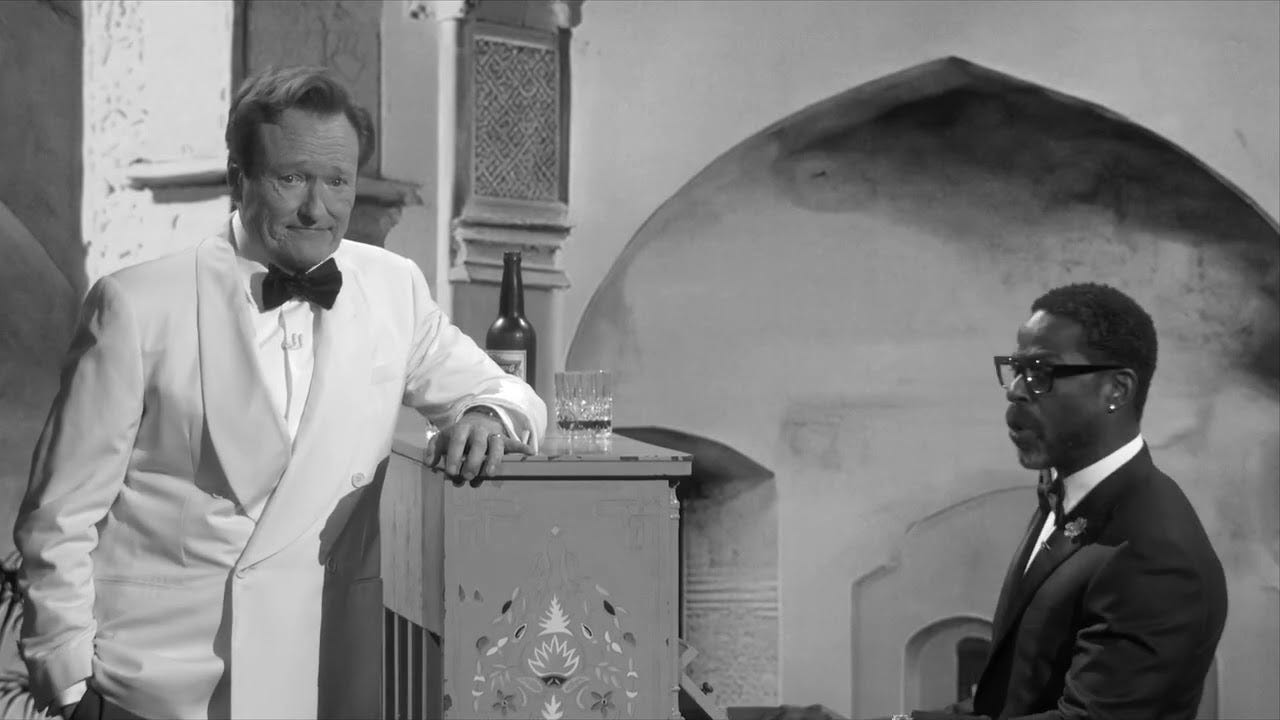
Host Conan O’Brien is there mostly to keep things silly and light. Yet, there he was Sunday night lampooning the streaming-born practice of recapping plot points for people absorbed in their second screen vis a vis Casablanca. Before that, he went hard in the paint on Netflix CEO Ted Sarandos for the part his company has played in both imperiling the moviegoing experience and in our deepening loneliness crisis.
There is a real edge to Conan’s mockery. Sarandos seemed to take it in stride, but if he turns out to be a thick-skinned tech CEO, he’ll be the first of which I can think.
None of this is to say that Hollywood’s existential crisis is imagined or even overblown. It’s quite real, and it has the potential to do a great deal of ongoing damage. The industry, though, didn’t seem quite as unsure of itself or as resigned to its fate as it has been in years past.
Perhaps it’s a death rattle, but on a night when a 39-year-old from Oakland took home a bunch of awards for a film that was as commercially successful as it was critically acclaimed in a month when one of the major studios announced it would lengthen its theatrical windows, I’ll choose cautious optimism, if only for a moment.