

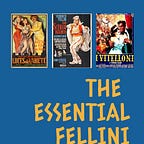

In the first episode of the second season of Crash Course, host Andrew Johnson introduces the hook for this installment in the series—The Criterion Collection’s box set The Essential Fellini—and quickly welcomes his new co-host, Tom Kutsch of Al Pacino-hating fame.
They start with the key historical context: Fellini’s birth in 1920 in Rimini, his move to Rome in 1939 where fell in with a cognoscenti bursting at the seams in the capital city, and then his first foray in to film, writing for Italian neorealist master Roberto Rossellini before seeking out his own measure of control.
After discussing the creative release of post-War Rome, they then cover the first three films in the set: Variety Lights (1951), The White Sheik (1952), and the far more personal and revealing I Vitelloni (1953).
From the start, they identify a clear contrast between Fellini’s emerging voice and the neorealist predecessors with whom he broke in to the moviemaking business. But don’t let the combination of whimsy and existentialism fool you—Fellini was drawing on those roots from the get-go, especially with I Vitelloni, which, if not recognized as a classic at the time of its release, is so clearly a springboard for what will come next.
Listen to the new episode now.
Show Notes
00:00 Welcome to Crash Course
01:07 Season Focus on Fellini
02:26 Fellini’s Origins and War
03:51 Neorealism and Working with Rossellini
04:58 Post-War Rome and the Creative Boom
08:12 Hollywood and State Support of Film
13:33 Three Film Rundown
17:15 First Impressions and Rankings
17:54 Variety Lights Deep Dive
19:15 Neorealism Versus Fellini’s Escapism
24:28 Chaplin’s Influence
27:38 Dreams and Carnivals
28:36 White Sheik Quick Take
30:09 Why I Vitelloni Hits Hard
31:13 Small Town Slacker Life in Italy
34:11 Contrasting Moraldo and Fausto
37:03 How Fellini Breaks with Neorealism
46:07 Next Up in the Set
49:34 Outro


