


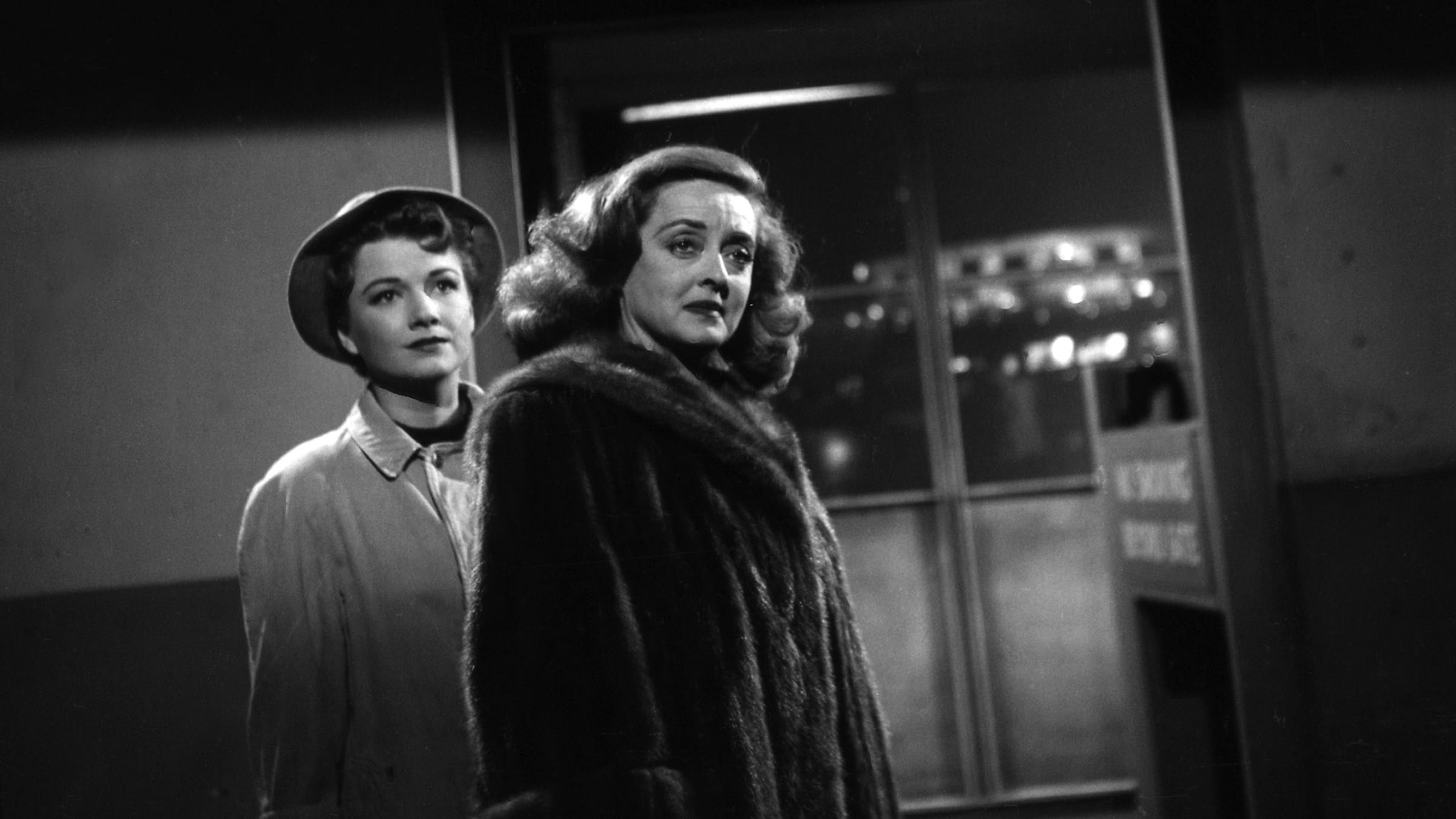
Aging in the spotlight takes its toll. The early 1950s brought us no less than three Hollywood classics that ruminate on that subject.
Sunset Boulevard offers the most disturbing version of things, its deluded, reclusive subject Norma Desmond resorting to murder in a misguided attempt to get another “closeup.” The ostensibly more airy Singin’ in the Rain is brutal in its own way—mercilessly knocking the shrill Lina Lamont (Jean Hagen) from her perch when a newer model, in the form of Debbie Reynolds’ Kathy Selden, comes along. And then there is All About Eve, which stands apart in large part because of the depth afforded its graying star, Margo Channing.
It can’t all be attributed to Bette Davis, who plays Channing. Joseph L. Mankiewicz, who wrote and directed the film, based his script on a short story that originally appeared in Cosmopolitan, and Davis wasn’t first or even second choice for the role, with Marlene Dietrich being preferred by producer Darryl F. Zanuck, and Claudette Colbert favored by Mankiewicz. That’s all to say that there are alternative versions of this film in nearby parallel universes. But without Davis, those universes aren’t worth a visit.
She is, of course, a singular figure. Long before you ever see one of her actual movies, you have a conception of who she is and what she’s all about. Looney Tunes and ‘80s pop songs build an indelible mental picture, replete with buggy, droopy eyes, chainsmoking, sneers and scowls, and that husky-voiced quick wit.
This is a caricature that makes her all the more interesting in a film like All About Eve, where that persona belies fragility and self-awareness and a real underlying tenderness. No matter the claim made by the title, this is a film that is very much all about Margo Channing, and how she comes to terms with changing perceptions of her.
There are so, so many works of art that chart the course of a performer who is fundamentally broken inside—the kind of person who tries to fill a personal void through the adoration of the audience. Certainly, All About Eve should be included on that list.
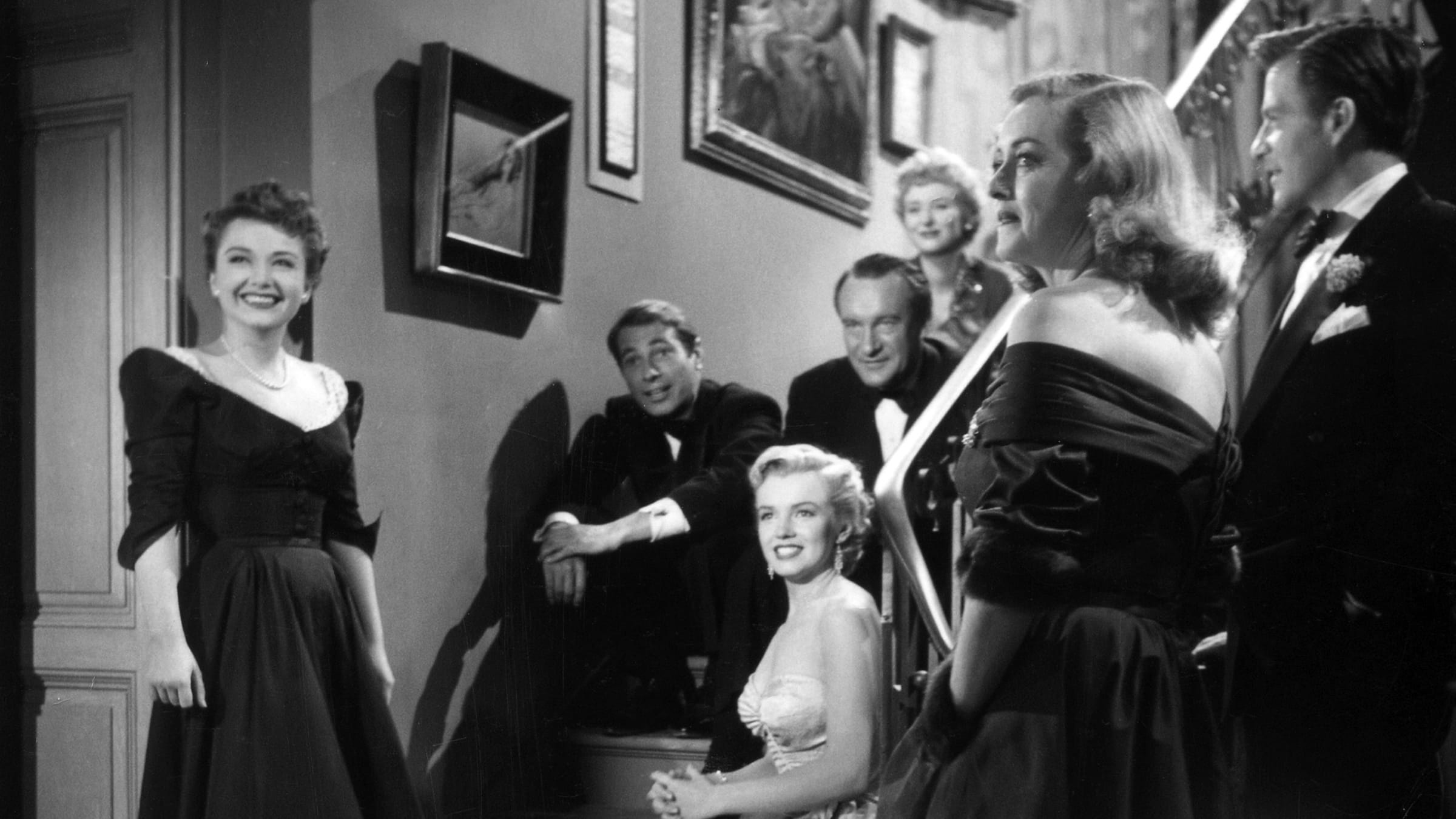
During the centerpiece party scene, Eve Harrington gives clear voice to this trope, as she and Bill Simpson (Gary Merrill) and Addison DeWitt (George Sanders) and Claudia Casswell (Marilyn Monroe) discuss the devotion to craft and requisite sacrifices that are required to perform successfully
“Why, if there’s nothing else,” she says, “there’s applause.”
Eve, played by Anne Baxter, speaks as if in a trance—almost as if she is meditating rather than in conversation—her eyes glazed over as she imagines what she thinks might be, but never will. This is the clearest sign yet that Eve is one of those broken types. And what’s interesting about that is that her counterpart, Margo, has thoroughly rejected this kind of tilting at windmills by the end of the film.
It is Margo, after all, who decides of her own accord that she doesn’t want the part Eve is scheming to take from her. It is she who decides that Bill is enough. It is she that, without even realizing it, renders Eve’s scheming obsolete. Eve gets what she wants, but not at the expense of Margo. Instead, she gets it because Margo won’t even engage in a ridiculous zero-sum game.
This is aging gracefully. This is being at peace with who you are and what you’ve accomplished, even if you aren’t exactly content. And this is the point at which it becomes hard not to talk about Bette Davis herself, as opposed to the character she is playing.
Davis’ Channing laments her age, putting an exclamation point on it at one juncture by saying she is, “40 … fourrrr-ohhh.” And yet it is her experience and wisdom that disentangles her from the cycle that Eve Harrington begins and that Phoebe (Barbara Bates) perpetuates in the film’s final shot, her visage reflecting infinitely off of floor-length mirrors as she begins to do to Eve what Eve has tried to do to Margo.
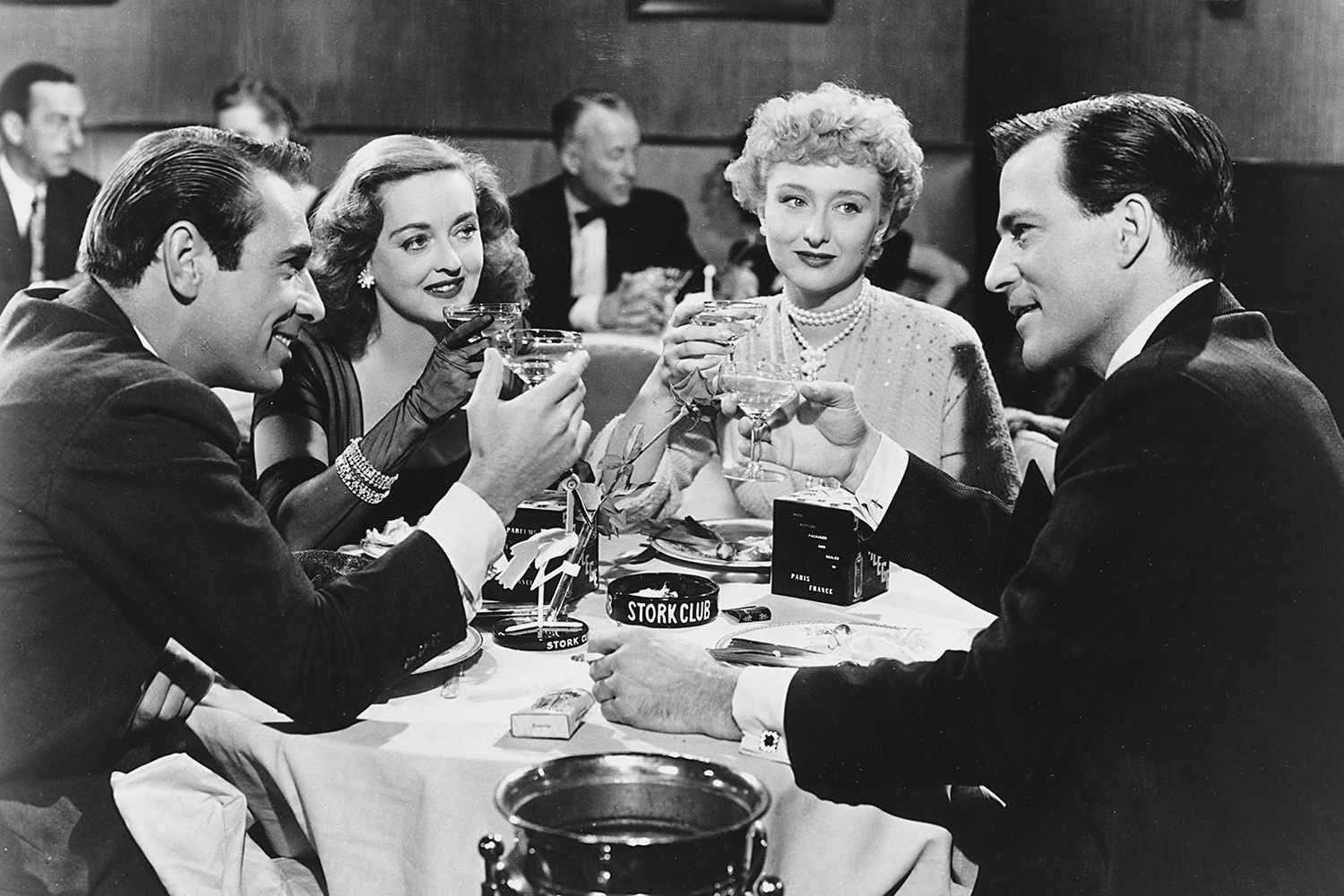
It is Margo’s ability to rise above the fray—an ability that feels hard to distinguish from Davis herself—that makes All About Eve so interesting. By the time this film was made, Davis was past her prime. She was nominated for an Oscar for her turn as Margo, and it would not be her last. But you get the sense that those accolades don’t really matter to her character or her—that she, Davis definitely and Margo maybe, draws her satisfaction from other sources.
There is, it would seem, life after and outside of the spotlight, and it needn’t be sad or deluded or pathetic or humiliating.