


Here is a list of films Disney released this year in theaters (including Marvel Studios and Pixar, but excluding 20th Century Studios):
Captain America: Brave New World, Snow White, Thunderbolts*, Lilo & Stitch, Elio, The Fantastic Four: First Steps, Freakier Friday, Tron: Ares, Zootopia 2
And, just for fun, here is a look at what’s coming from the Mouse in the year ahead:
Hoppers, The Mandalorian and Grogu, Toy Story 5, Moana, Hexed, Avengers: Doomsday
If you’re not depressed by that list, then I’m not entirely sure what you’re doing here. But, just to draw a line under it, that’s a total of 15 feature-length releases this year and next, only three of which are not some kind of remake, sequel or franchise extension. Elio—the only one of those three that anyone has seen—was a nice film, but it hardly stirred optimism of another Disney renaissance on the horizon.
The question I have is whether I, or anyone else, should hold a candle aflame at all. It seems I am not alone in wondering.
After Walt [Disney] died, his company became just one more Hollywood studio. For a few decades, it flourished as an entertainment conglomerate, but eventually the people running the Walt Disney Company lost the desire to try new things. They just rehashed formulas.
That business today puts all its energy on extending these tired brands. But it’s wise to remember what extended means in the finance world—it indicates that you’re out on a limb, and have lost any margin for error.
Walt Disney would be horrified. But what would he do if (through some Tinkerbell or cryogenic magic) he were made C.E.O. today?
I think we can answer that question.
Walt would ditch the plans for sequels and prequels and spin-offs, and focus on fresh new concepts.
He would hire people full of imagination and creativity—because he always did that.
But he would be just as willing to adapt some story from an outsider or in the public domain—if that was more exciting or interesting. He didn’t need to own it, because he had confidence that he could do it better than anybody else.
Even better, he would incorporate the latest technologies in his vision, and enter into partnerships with the most forward-looking companies in the world to realize his dreams.
Above all, he would do this in a holistic, people-oriented way.
There are a few details I would quibble with here. First, I think the author, the great Ted Gioia, is underselling the spirit and the heights of the Jeffrey Katzenberg years. Second, I think if you’re going to celebrate Walt’s unparalleled vision for the future—and you definitely should—you have to pay tribute to his brother Roy who rehashed a whole lot of formulas in his day to enable WED Enterprises, the corporate vehicle for Walt’s next thing, whatever it ended up being from year to year.
Those really are quibbles, though. Ted is absolutely correct that the creator of Disney would be appalled by its current state.
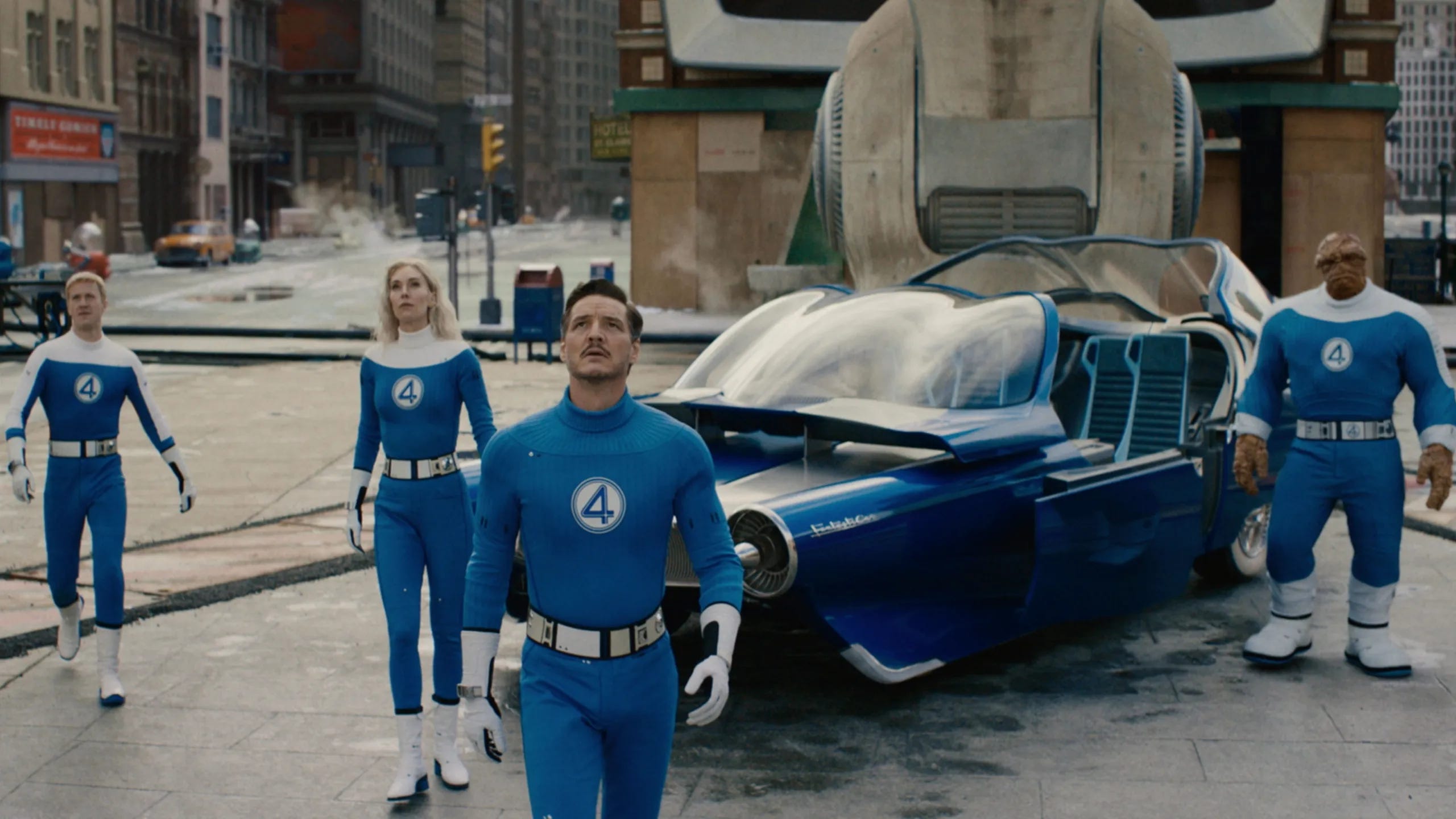
I watched The Fantastic Four: First Steps this week. It’s probably the best of the 2025 releases. The production design is truly wonderful and the performances of each of the Four have some real soul. But, put in the context of Walt Disney’s legacy, it is astonishingly far from what the man stood for and what he built. There are many, many worse films out there. But this is still nothing more than a slick, clever repackaging of scores of films just like it. Like cotton candy, it is meant to taste sweet and then dissolve all in a moment.
The thing that I find so hard to understand is just why Disney, the corporation, is so milquetoast. What is to prevent it from resurrecting something like WED Enterprises and pursuing a radical vision for the future in parallel to what it is already doing. (I know, I know, it’s maximizing shareholder value, stupid.)
Or, as Ted puts it:
Some of you know that I’ve speculated about a merger between Apple and Disney. In many ways, that would represent a return to Walt Disney’s original E.P.C.O.T. vision. But there would be one big difference—both Apple and the Disney Corporation are fallen angels, who have lost their mojo.
But if you brought them together and returned to that initial vision of a healing, people-oriented partnership between high tech and entertainment, miracles might happen.
Alas, there’s no Walt Disney to oversee it. But maybe somebody else—not named Tim Cook or Bob Iger—could rise to the challenge. After all, the need is enormous.
Even more to the point, this abandoned vision of healing, human tech married to creativity is much better than any of the other available options for these companies. Best of all, we really don’t need magic—so Tinkerbell can put away her magic wand. We only need leadership and courage.
Maybe we can’t bring back Walt Disney. But he left behind a pretty good playbook, and an inspiring vision. Now’s the time for someone else to start again where he left off.
Look, there are a lot companies—especially almost all of them in Silicon Valley—that display outright contempt for their customers. To put it more bluntly, many firms hate human beings and view their relationship with them as purely extractive.
Disney isn’t one of them—not yet—and it needn’t ever be. Its birthright gives it license to be exactly the opposite—to engage in something far more ambitious than that of a middling quarterback trying to run out the clock.